What does a regulator do in diving?
Posted by Philip DePalo on
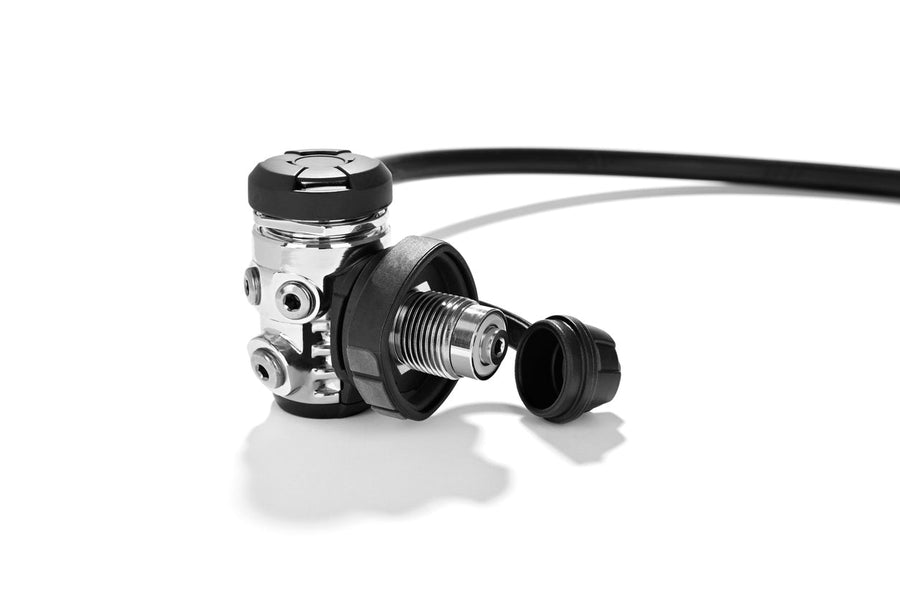
If the tank is the "lungs" of your scuba setup, the regulator is the "brain." It is arguably the most important piece of life-support equipment you’ll own. But for those just starting out, the question remains: What exactly does a regulator do?
The Science of Breathing Underwater
Your scuba cylinder is filled with highly compressed air (usually 3,000 psi). If you tried to breathe directly from that tank, the pressure would be dangerous. A regulator’s job is to "regulate" that high-pressure air down to a pressure that matches the surrounding water, allowing you to breathe naturally and effortlessly at any depth.
The Two Stages of Delivery
A modern regulator functions in two distinct steps:
- The First Stage: This is the part that attaches directly to your tank. It drops the 3,000 psi tank pressure down to an "intermediate" pressure.
- The Second Stage: This is the part you hold in your mouth. It further reduces the air to the exact pressure of the water around you, delivering air only when you inhale (on-demand).
Why Quality Matters
At Eastern Sports, we carry industry-leading regulators from brands like Sherwood, Genesis, and XS Scuba. A high-quality regulator ensures:
- Ease of Breathing: Higher-end models require less effort to inhale, which reduces fatigue and helps your air last longer.
- Reliability: Modern regulators are engineered to be "fail-safe," meaning if a mechanical issue occurs, they are designed to deliver a continuous flow of air rather than shutting off.
- Environmental Sealing: Essential for diving in various temperatures, preventing the internal components from freezing or getting clogged with salt and sand.
Need a Breath of Fresh Air?
Whether you are looking for your first setup or upgrading to a high-performance system, we have the right gear for your next adventure.